
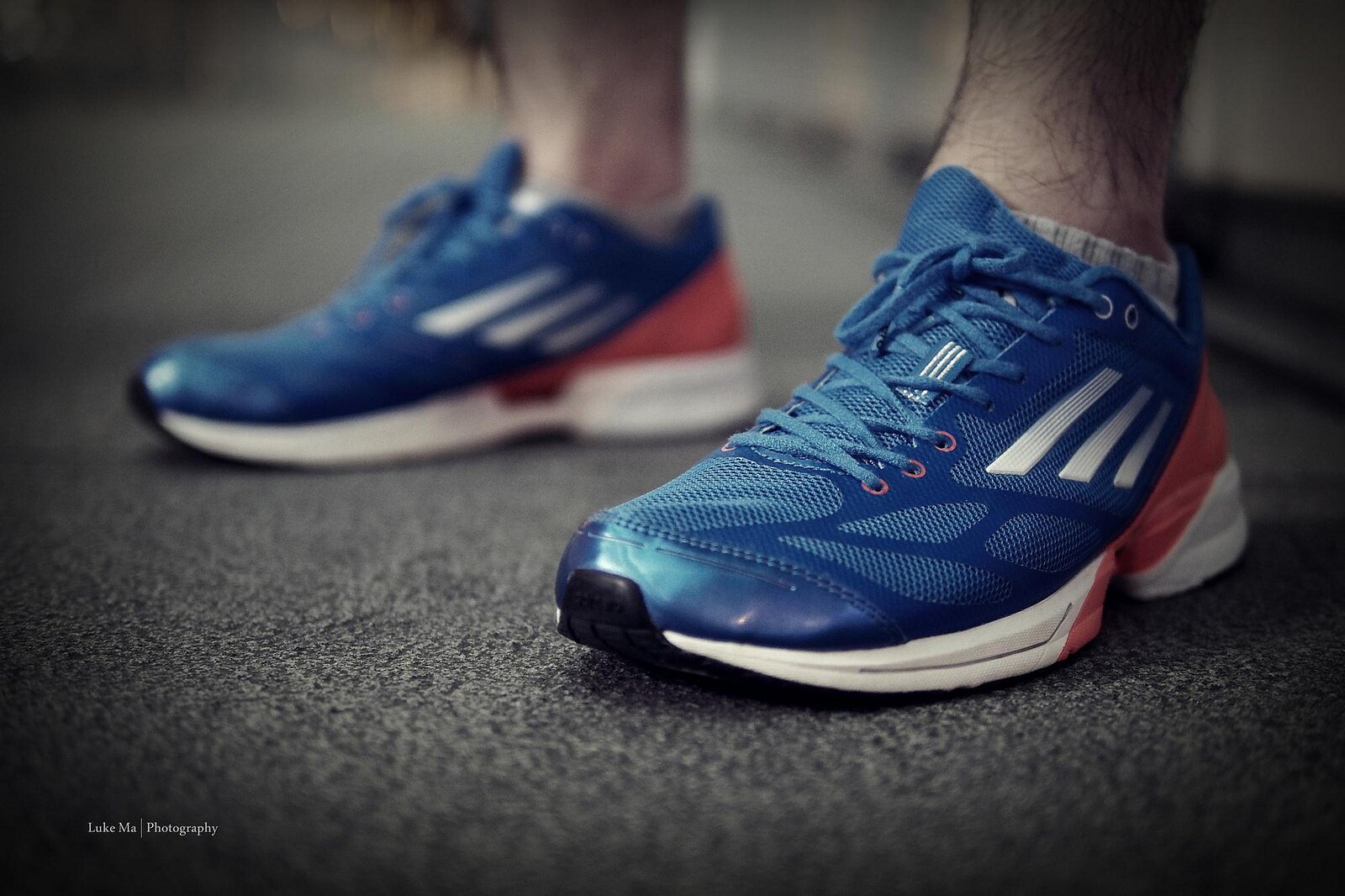
If you plan to do a lot of running and training then picking the correct footwear is vitally important. You might not think it, but wearing the wrong type of trainers for your foot type can not only impact your performance but also have a detrimental effect on your health too – causing pain and damage to your toes, ankle, and feet overall.
Take a look below at our top running tips when it comes to picking the right shoes
There have been a lot of medical studies in this over the years with many varying results. The bottom line seems to be that the right trainer can improve performance in general.
This is all because of something call gait – this is the way that your legs and feet behave when running. Specifically, you’ll want to look at your type of pronation which is the way your feet land and take off from the floor whilst in motion. There is three types of pronation and each has certain characteristics. The type of pronator you are is normally linked to the type of arch you have on your foot:
Neutral pronation
this is the most common and ideal type as during running you will land on your heel and naturally roll onto the ball of your feet to take off again. This rolling motion will be at an angle of around 15 degrees inwards. People who have a normal arch will generally have neutral pronation.
Over-pronation
his type of pronation occurs when you roll too much inwards from the heel to the ball of your feet, going beyond the 15 degrees, and end up putting pressure on your big toe and taking off from this stance. People who have a low arch will generally tend to over-pronate.
Under-pronation (supination)
his type of pronation occurs when the foot rolls outwards from the heel to the ball of your feet and ends up putting the impact and take-of pressure on your two smallest toes. People who have a very high arch are more prone to this type of pronation.
How to find out your arch type
It’s very easy to find out your arch type by simply doing the ‘wet foot test’. To perform the test you’ll need a basin of water and a square of cardboard or paper big enough to fit your foot on. To perform the test simply lay down the card on the floor and dip your foot in the water ensuring the entire bottom of your foot gets wet.
Now lift your foot out of the water and shake off any excess water and then place it lightly onto the card for a few seconds. Now remove your foot and look at the print you have made. The print should show you your heel, the ball of your foot, and joining the two your arch. That is the important bit – look at your arch and compare it to the chart below to know what arch you have:
Once you know your arch you can then start to look towards getting trainers or shoes that are made for your type of pronation. A lot of specialist shops will sell trainers designed for certain types of pronation and you should hopefully find that getting the right trainer helps with your overall performance and reduces the chance of pain whilst running.
How running shoes should fit
Most runners will tell you that they normally go up a size or even a size and a half to get running shoes that fit and are comfortable. Your feet can swell when running, so your shoes need to be supportive mile after mile.
Some brands like Nike and Brooks, offer a certain amount of miles/days you can run in the shoes and still return if they are not comfortable. Not every brand does this though, so please make sure you check their terms and conditions before you buy.
Using our handy guide to check how you pronate, you can look for the type of shoes you need. Running shoes are often labeled as neutral, support, or stability and these will ensure that your shoes give you the ultimate comfort, protection, and support needed.
Another pro tip is to look at how to lace up your shoes. There are different ways depending on whether you have a wide toe box, wide feet in general, small ankles, to stop you from getting numb feet, and many more. There will be a way that works for you, and it may take a few different ways before you find the right style.
Which running shoes should you buy?
Most trainers are very similar – they’re lightweight whilst at the same time provide cushioning for your feet and generally will curve upwards at the toes to help the rolling motion of running feet. But is there more to it? Why do some cost £100’s whilst others will cost you £20? Well, it’s mostly about brand and style. For the most part, there is very little difference in the materials or construction of the trainers you buy, so spending a lot more on some that look a bit better could be a waste of your money.
There are so many brands of running shoes, that even for a seasoned runner, it can be a bit overwhelming with regards to what running shoes you should buy. The best thing to do is to go into a shop and try some on when you get your gait analysed but if that is not possible, do your research, and also ask your fellow runners.
Everyone has a preference but some do fit better than others and there are a wide range of running shoes within a brand, all with varying price tags. Check for offers, some of the previous season’s shoes will be cheaper, especially if a new model is due to be released.
The main brands that are recommended most are Nike, Brooks, Asics, Saucony, Hoka, Adidas, ON, New Balance, and Mizuno. There are lots more brands though so there will be a perfect running shoe for you out there. You do not have to buy the prettiest shoes or the brightest, you do have to make sure they fit right and work for you.
You should always try trainers on before committing to them. Go to a local store and try on all the pairs you like, get a feel for them, and be sure they’ll do the job before buying as you don’t want to be a few weeks into your training suffering from sore feet or blisters from ill-fitting shoes.
Other Considerations
There are different types of running and depending on what you’ll be doing – road, race, track, trail or fell – there are different running shoes that you will need.
Trail and fell shoes fit differently to standard road shoes, plus they have lugs to make sure you’re not losing grip on different terrain, and then you have race shoes which are more lightweight and streamlined. Some places also do beginner running shoes which are usually a cheaper price and more basic to ease you into it. To begin with, standard road shoes should suffice for whatever you’re doing unless you’re thinking of doing trail or fell races.
The important thing for a runner is to find the right shoes for you. Try some different ones on, get your gait analysed, and try before you buy.
If you’re looking for a challenge to take part in, then check out our listings for running events